
“28 Years Later: The Bone Temple”: How VFX Bloodied the Jimmys and Brought Samson to Life
Directed by Nia DaCosta, 28 Years Later: The Bone Temple continues the story of 28 Years Later, where Spike (Alfie Williams), a young boy living in a community isolated from the infected, risks everything to find a cure for his ailing mother. Now fighting for his survival, he’s forced into a group of Satan-worshiping hooligans led by Sir Jimmy Crystal (Jack O’Connell), where “charity” means offering the living to Old Nick through grotesque and twisted rituals.
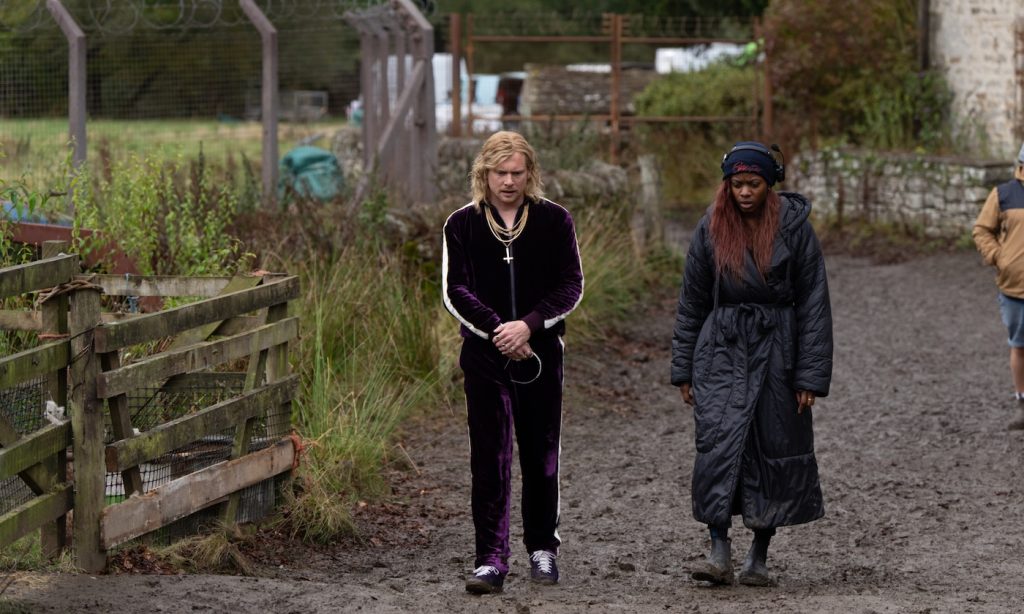
For production, it meant developing in-camera techniques using special effects, prosthetic makeup, and stunts to keep the surreal violence tactile and believable – all before visual effects provided the finishing touches. “Nia’s approach to the visual effects was for us to be a supporting role and to help facilitate things they were unable to shoot,” says VFX supervisor Dean Koonjul of Union VFX, the same post house behind the flesh-eating expansion of Danny Boyle’s reboot. With The Bone Temple, the VFX work went far beyond adding more gore to the bloodbath. The team expanded the bleak world, cast the infected in a new light, and ignited infernos at nearly every turn.
DaCosta crafted her own look and tone, which was photographed by Sean Bobbit (12 Years a Slave), not on iPhones like its predecessor – framed by Anthony Dod Mantle – but on the Arri Alexa 35 with anamorphic lenses. “We did a lot of long takes where we would shoot whole sequences or whole beats of action in one go,” notes Koonjul about the film’s shooting style. “We didn’t want to interrupt the flow by resetting, so we had an approach where we would do a pass without VFX and then a pass for VFX.”
Depending on the scene, the VFX team would place tracking markers on actors or collaborate with the special effects and prosthetics department to plan what would be finalized in post. “Our methods were really just to try and get the best out of the performances,” Koonjul says. “So in certain sequences, there might be shots with no VFX because it was all done in-camera, or shots where there was no in-camera work. We had it all, but it also meant we had a lot of good references to match to, and hopefully the results were fairly seamless.”
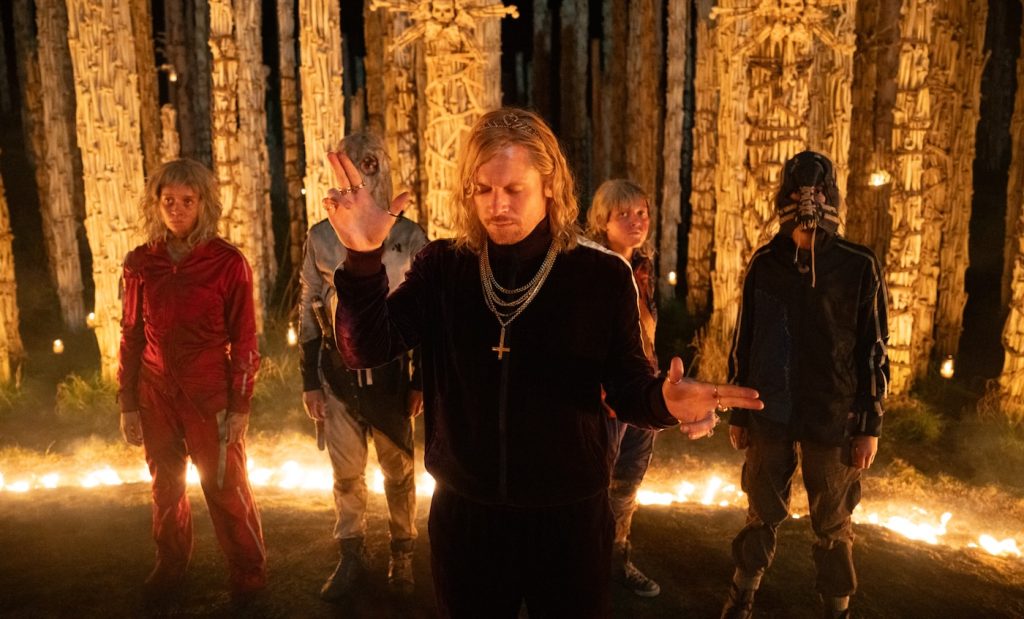
One scene involves Spike’s initiation into Jimmy’s cult, a group of blonde-wigged, tracksuit-wearing blokes all named Jimmy. Spike is made to fight another member to the death, or be killed if he refuses. Shot at an abandoned leisure center, the visual effects were designed to be invisible. “Because of the confined space, there’s a lot of circling and spiraling to the camera work around the action and the actors. So we just allowed those performances to play out to not disrupt the actors,” Koonjul notes. Special effects designed a rig that squirted blood for its climactic moment, which visual effects embellished in post.
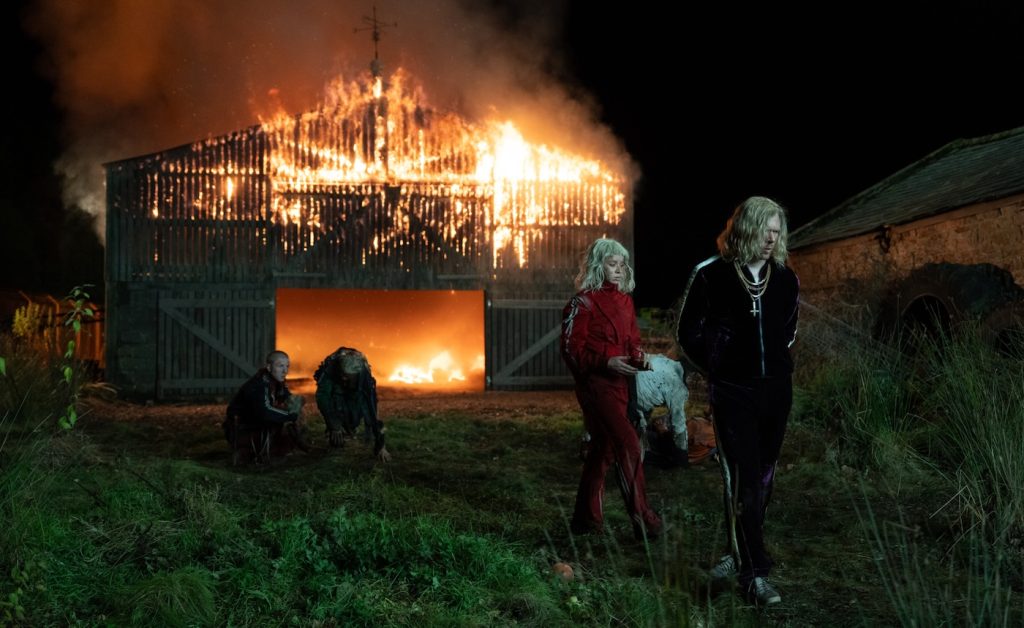
Another was a barn sequence that ended up in flames. “The special effects team rigged that whole barn. One full side of it was completely covered in scaffolds they had rigged to burn. And we did burn it. The only question was how we could help to make it as safe as possible,” Koonjul expresses. “So we added extra fire to certain places so that it’s encroaching further and enhancing what was there.” Instead of relying solely on computer-simulated fire, visual effects filmed practical fire elements during shoot days and layered them onto the burning barn. “The aim was to try and avoid going down an FX simulation route and adding CG fire,” he says. The results make the fire feel strikingly real.
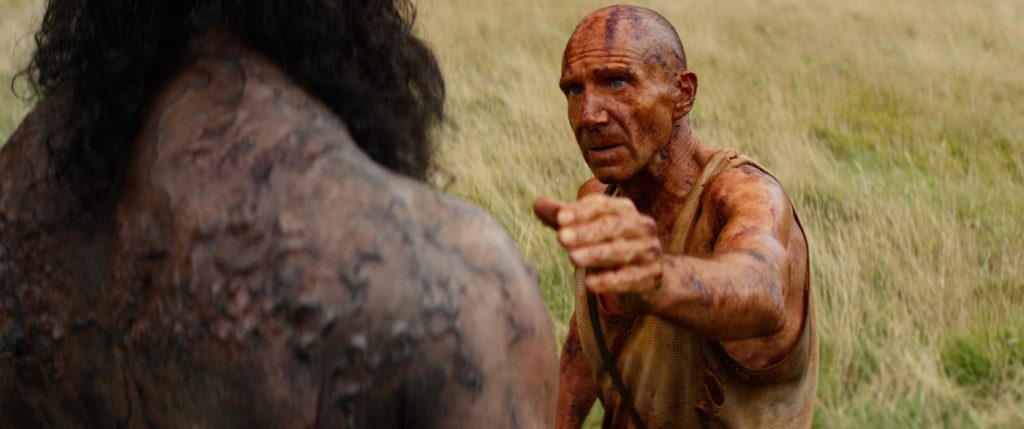
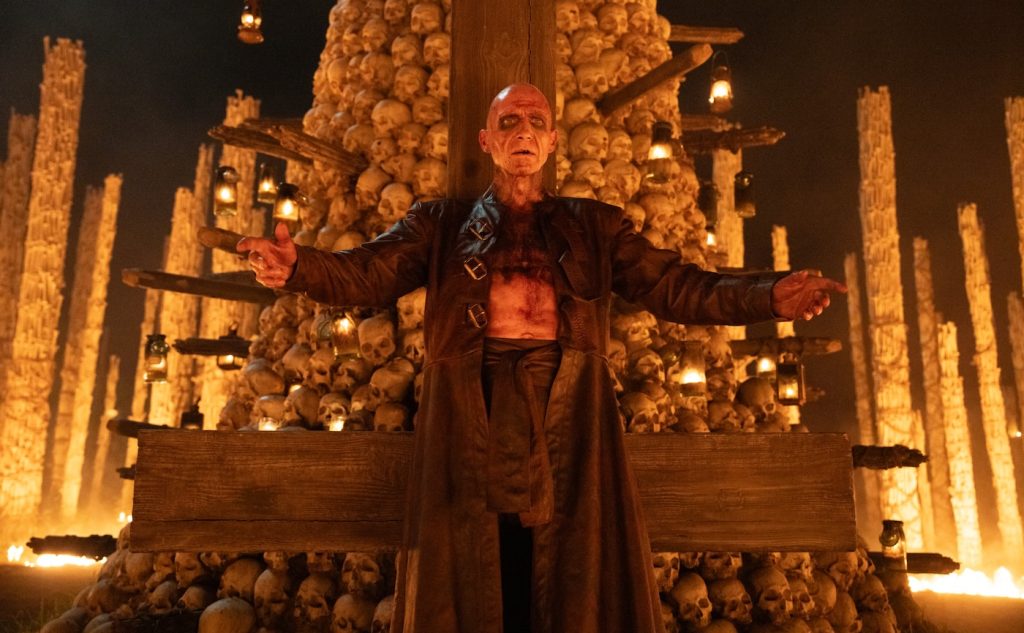
Also returning is Ian Kelson (Ralph Fiennes), the enigmatic doctor who tried to save Spike’s mother, and the Alpha (Chi Lewis-Parry), the faster, stronger (more intelligent) variation of the infected. Kelson’s relationship with the Alpha, which he names Samson, has evolved. He’s trying to find a cure, or at least alleviate some of the pain Samson experiences through sedatives. DaCosta brings viewers into the Alpha’s psyche, framing distinct close-ups revealing his emotional state. “The first time we meet Samson, we see him across a field from Kelson. He is in his sort of full Alpha berserker look at that point. And then, as the film progresses, and he gets more humanized, his wounds start to heal. He’s looking more and more naturalistic,” says the VFX supervisor. “They had four stages to him with multiple contacts and makeup to show that transition that was combined with effects work. There was also more work pushing Kelson to be a bit more vibrant, and that sort of iodine, Satan look. So, in that first scene between them, there’s that contrast. Then, as we go, their skin tones start to resemble each other.”
“Our work was really driven by the performances and what worked better in terms of the actors,” says Koonjul about the overall approach to the film. “As a sequel to Danny’s film, we had to find fairly pragmatic ways of solving problems and getting the most out of the budget and the actual resources that add on this show. It’s a much smaller project. We had a smaller team, and it’s a smaller shot count. But I don’t think the quality of the work we did was any less.”
28 Years Later: The Bone Temple is in theaters now.
Featured image: Chi Lewis-Parry in “28 Years Later: The Bone Temple.” Courtesy Sony Pictures.