
“Sentimental Value” Production Designer Jørgen Stangebye Larsen on Joachim Trier’s Tender Family Drama
Winner of this year’s Grand Prix prize at Cannes, Joachim Trier’s tender family drama, Sentimental Value (original title: Affeksjonsverdi), is co-written with Eskil Vogt and stars Renate Reinsve (Presumed Innocent); the trio previously collaborated on 2021’s critical darling, The Worst Person in the World, which was nominated for two Oscars, Best Original Screenplay for Vogt and Trier, and Best International Feature. Trier’s latest explores themes of grief, love, forgiveness, and healing from trauma through art.
A stage actress spiraling with anxiety and bitterness, Nora Borg (Reinsve), and her pragmatic sister, Agnes (Inga Ibsdotter Lilleaas), have to deal with their estranged father, the once-successful film director Gustav (Stellan Skarsgård of Dune, Andor), who returns to attend their mother’s funeral. Unfortunately, he still owns the family home and intends to shoot his next movie (inspired by his mother’s suicide) at the house. When he offers the lead role to Nora (who would play Gustav’s mother, Karin), she refuses outright, since she still resents him for abandoning them after the divorce. So, he offers it to eager Hollywood actress, Rachel Kemp (Elle Fanning).
Shot on film, Trier anchors the family’s struggles in a stunning Dragestil (or “dragon style”) house that quakes and shivers with the joys and agonies of life. In a serendipitous turn, production designer Jørgen Stangebye Larsen (Absolution, The Burning Sea) learned that he and Trier had previously shot at that very location. “It turned out to be the house where we shot Oslo, August 31st [which also stars Reinsve], 14 years prior. So, I knew it very well,” he says of the house owned by Norwegian musician Lars Lillo-Stenberg, which intertwines with the emotional turmoil that has stifled multiple generations of the Borg family.
Larsen recently spoke with The Credits about his second collaboration with Trier.
The house plays a pivotal role. What was the aesthetic that you were looking for?
It’s a very beautiful old house — it’s changed a bit, but still has that patina and feeling of a soul. Some changes were made to make it a contemporary house, such as painting over some period wallpaper that I didn’t want for the present-day scenes, and a rusty red color in the library. I painted all the rooms but kept the aging patina.
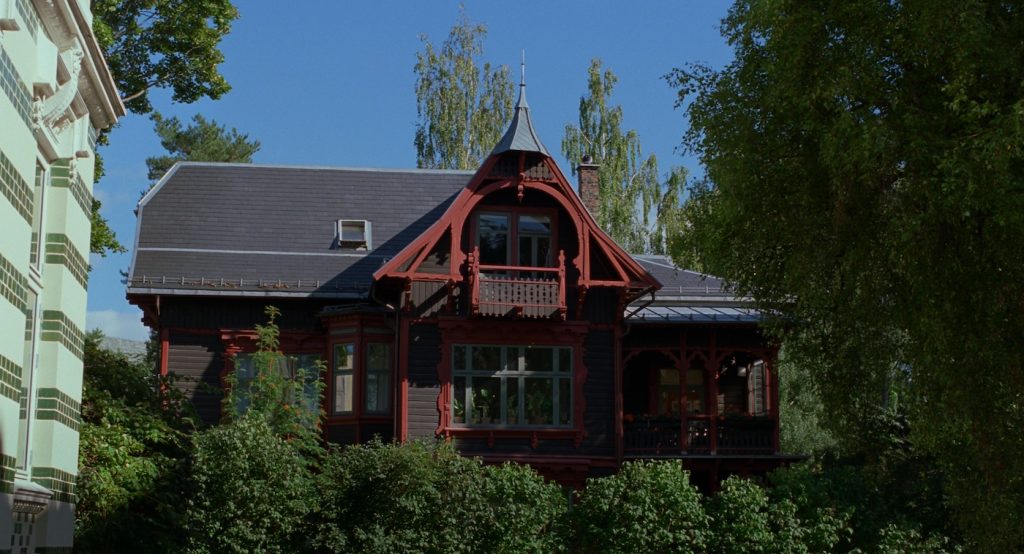
It is adorned with a very distinct red trim on the exterior. Was that added for the film?
No, it was like that. We didn’t do anything to the exterior.
I interpreted the red trim as a symbol of the anger and trauma in that family, especially with Nora’s seething resentment against her father. Am I reading too much into it?
It’s lovely however people interpret that. I didn’t think that myself, but it gives the house a character of its own, helps it stand out in a neighborhood that has several embassies. The other houses around it are more renovated, so it really stands out. The architecture style is “Dragestil” — the National Romantic style — with a lot of woodwork.
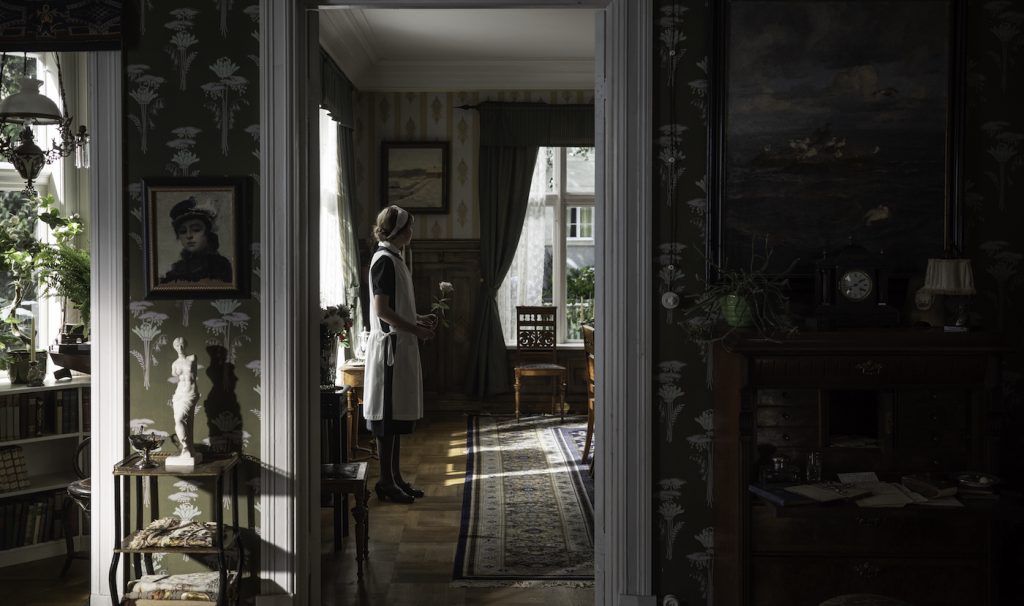
The film covers the 1940s all the way to the present day. What were some of the changes made to denote the different eras?
In the location house, we shot all the scenes in the present day: Nora’s mother’s funeral and Gustav’s table reads with Rachel, and in the ’90s when the sisters were growing up. We found economical ways by not changing the kitchen. We changed only the three main rooms connected to each other: the living room, dining room, library, and hallway. For the kitchen in the ’90s and the present day, we added some tiles, cabinets, and different table setups. Otherwise, we kept it as it was.
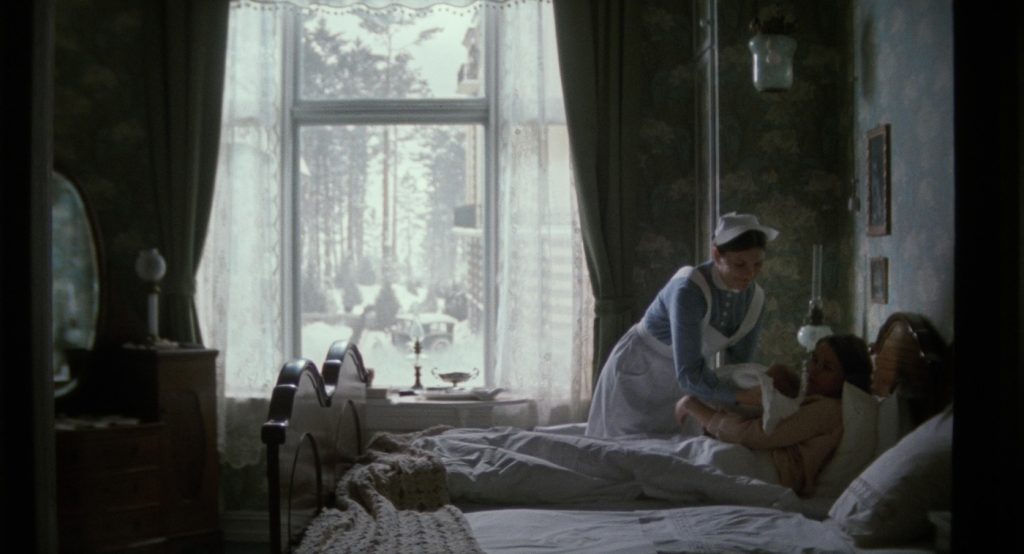
What about the room at the end of the hallway, where Gustav’s mother, Karin (Vilde Søyland), hung herself decades earlier?
In the present day, it’s a storage room. We did all the other time periods on the soundstage, including the corridor in the ’50s when Karin walks down before ending her life. In later years, it’s where people put their jackets. In the final scene in Gustav’s film, Nora comes out and closes the door when the scene is over. It was quite beautiful to keep it completely empty with a little stool and the rope.
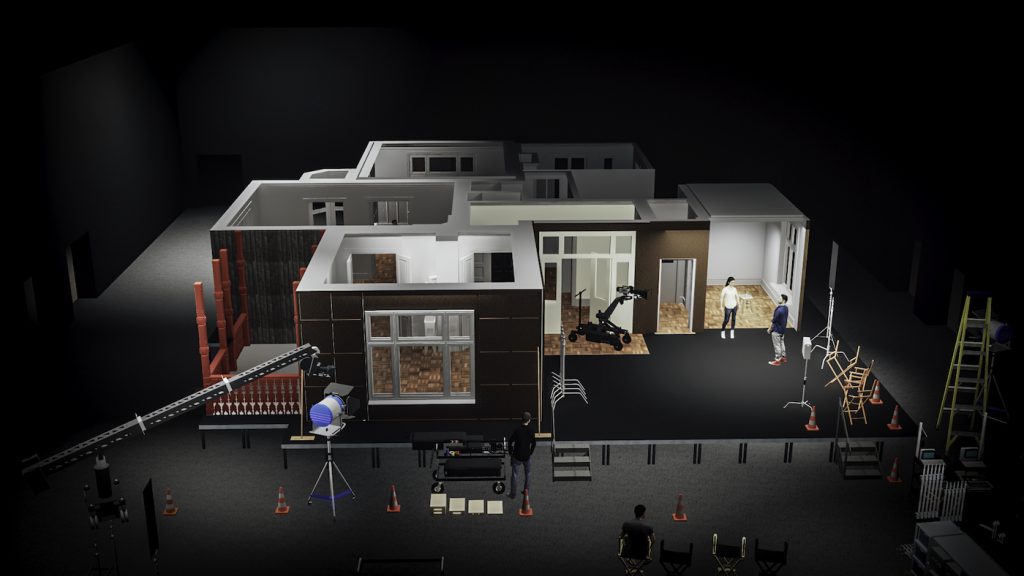
What was the design process for the soundstage version of the house?
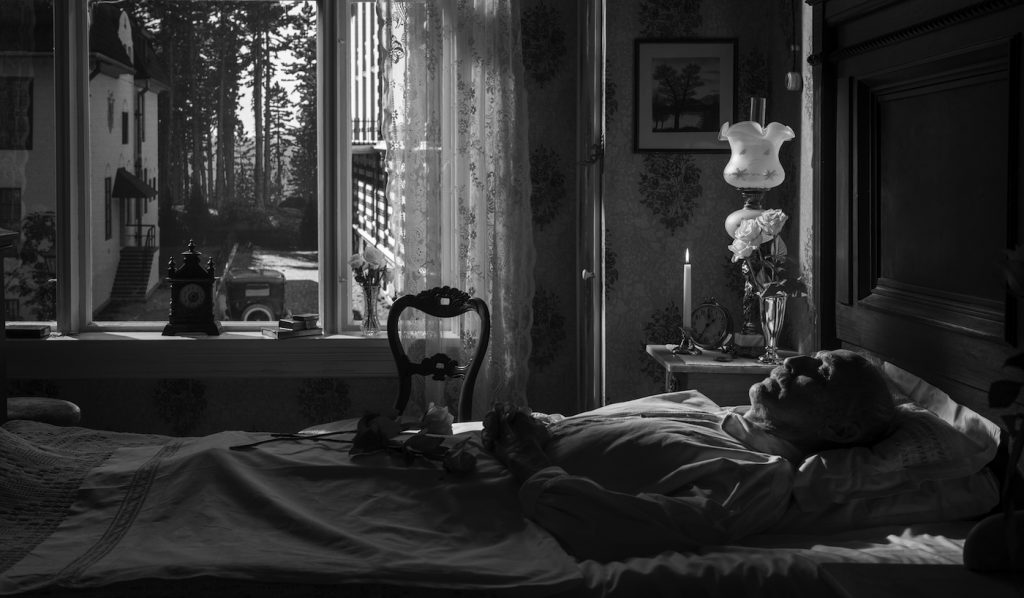
We built the first and second floors, including the bedrooms, corridor, and exterior balcony, with all the red woodwork. We had one balcony that could go on wheels between floors. It’s almost like building a real location on the soundstage because we had full ceilings in all the rooms, moldings in the ceilings, and aged wooden floors. We actually found a couple of doors that matched the house. We built the other doors and windows too, including the massive ones with double-paned glass in the living room. We had virtual production in-camera VFX with LED screens for the views outside the windows.
Why was it important to shoot this project on film?
We filmed on 35mm, 16 mm, and black-and-white because we wanted it to resemble the look of films in those eras. But the set needed to be authentic and lived-in to be believable as a home during all time periods. Everything we added contributed layers that amplified the believability and tactile feel of the set. I didn’t approach the time periods in a romantic way — it was very important not to make it just beautiful, but more about what was happening to these specific characters in the ’30s or ’50s, and make it look lived-in with a lot of details. What are they doing at that time? How did they hang their art? Maybe not perfectly.
Did you shoot more on the soundstage versus at the location house?
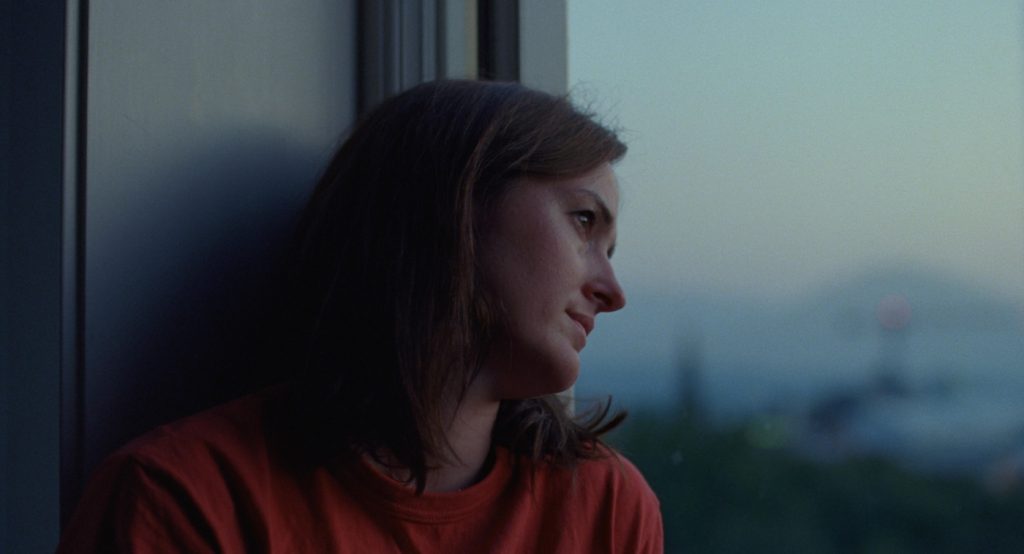
No, it’s actually the opposite. The older time periods are in montage sequences, so we shot one time period in a day, and then changed to another period. We shot more days at the location house for Nora’s mother’s funeral, most of the scenes in the present day, except for the bedrooms upstairs, and the table reads with Gustav and Rachel.
How did you style the rooms to reflect distinct decades?
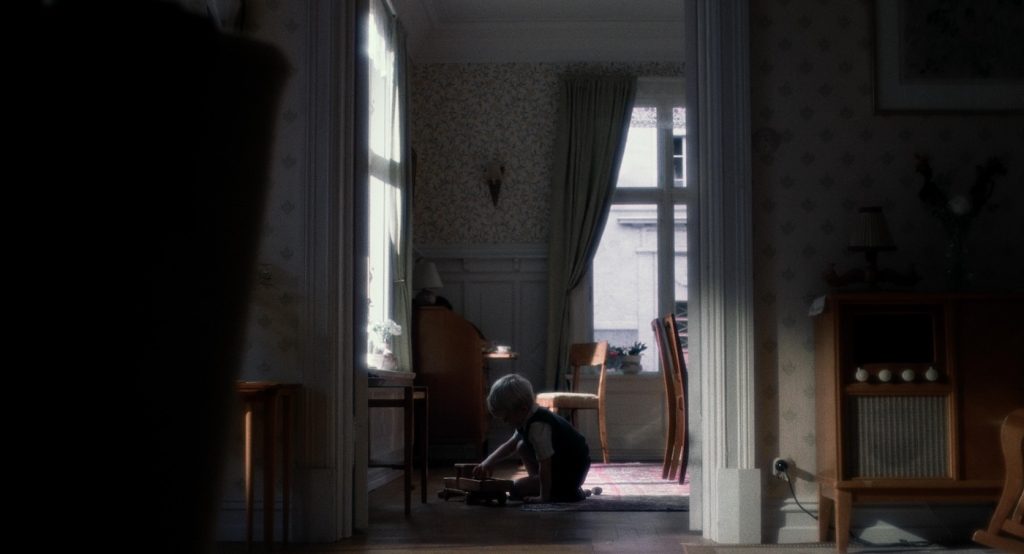
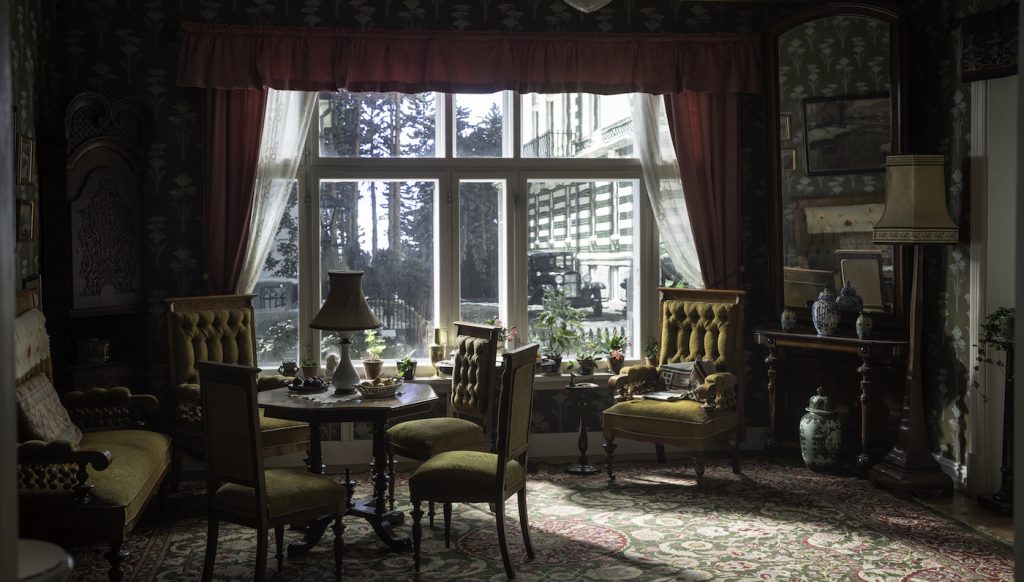
For the ’30s, when Karin was 12 years old and listening to records with her friends, we had darker wallpapers with lots of patterns, old furniture, and art. For the ’50s, when Gustav was a kid, we went into a lighter mood with more subtle wallpaper, mid-century modern furniture, and simpler shapes. For the ’60s, I didn’t change the wallpapers — I didn’t feel it was natural that Karin’s sister, Edith (Mari Strand Ferstad), who lived there until the ’80s, would’ve renovated after Karin took her life there. So, it was more about aging the house and reusing furniture in different ways.
Even though Edith was only in the film briefly, it is impressive to have her emotional psyche reflected in the décor as well.
Yeah, and I brought in some furniture from the ’30s that I imagine was stored somewhere in the house, but they took it out to use again. There was more colorful art in the 1960s, when I imagined many people coming and going for parties, poetry readings, music, and dancing, maybe to run away from the sadness, but also a time of joy. We see the ’80s in three shots with Edith and her lover and housekeeper, Lillian (Julia Küster), who lived there for all those years. I wanted to show the rich and beautiful life they enjoyed together, with a lot of colors, and surround them with art and books. But when Gustav moves in, he paints everything white and tears down the wood paneling. We had these one-shots through the doorway in the years 1918, 1925, and 2000, which were like death, birth, and the argument with Nora’s parents.
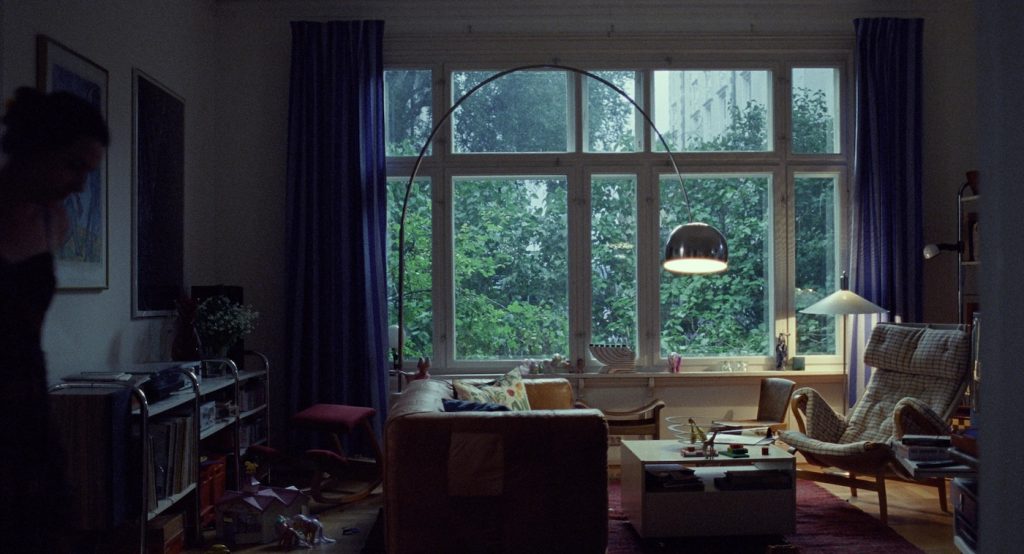
That’s when Nora overhears her parents’ arguing through the old stove pipes in the bedroom upstairs.
Yes, and there’s also a scene with Edith listening by those pipes in the 1940s, and again in the present day when Nora brings Agnes’s son, Erik (Øyvind Hesjedal Loven), up to show him the stove. That was all on the soundstage —using LED screens, we created period views with animated cars, buildings, and evolving nature as the trees grow over time.
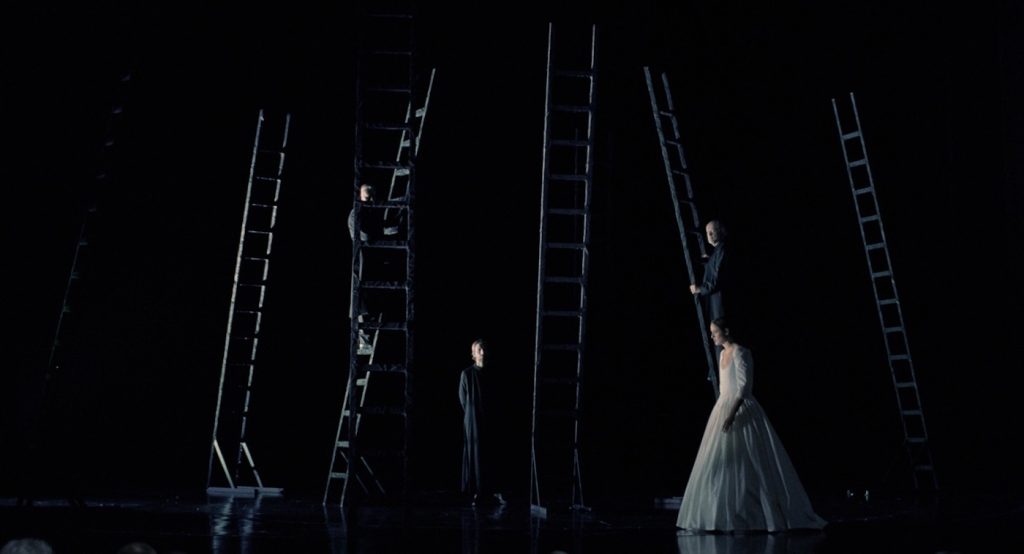
Where was Nora’s performance on stage filmed?
That was the National Theater of Norway — we shot for a week and worked around the theater’s schedule. We had to light both plays and try the set design in one day. I had to plan ahead since we had days with and without the audience. So that was another very carefully planned and quite challenging aspect. We started super early to get everything we needed there.
What was the most challenging part on this film?
Probably the changeovers from one period to another had to be planned very carefully. We had to change all the set dressings, like fabrics, curtains, and wallpapers, to add the patina and aging for each period. I used Twinmotion, a program with real-time rendering and lighting, so I could work with the sets in a very photorealistic way to show Joachim how they work in the room. We had to plan as carefully as possible because we only had one to one-to-two days, maximum three days, to do the shifts. But often with big challenges, you plan the most, so they go very well.
One of the most interesting aspects is the artistic play with the bilingual element in Gustav’s screenplay. Early on, Rachel reads a very emotional section in English during a table read. Then, towards the end, Nora reads the same in Norwegian with Agnes by her side, which is very cathartic. It highlights how translations, no matter how well done, often cannot fully capture an emotional sentiment.
That moment between the sisters is so pivotal that it really needed to work. I think that turned out really beautifully.
Sentimental Value is playing in theaters now.
Featured image: Renate Reinsve and Stellan Skarsgård. Photo Christian Belgaux/Neon.