

Michelle Yeoh’s “Flip It Around” Meme and the Costume Easter Eggs That Reveal Madam Morrible’s True Nature
“If you think about it, Madam Morrible, MM, flip it around, WW, Wicked Witch.”
Perhaps now the most obvious hint of Madam Morrible’s true intentions is that her initials MM become WW when flipped around. This has been highlighted repeatedly in interviews by actress Michelle Yeoh, who plays Madame Morrible in Jon M. Chu‘s Wicked and Wicked: For Good, garnering significant internet traction.
Let’s dive into other hints that Madam Morrible is the power-hungry leader using her magic for evil rather than the respected sorceress and headmistress of Shiz University.
Weather motifs run throughout Morrible’s looks. Her magical specialty is controlling the weather, which is presented through her costume, hair, and makeup. Her robes in Wicked: For Good have lightning strike embroidery, and one of her dresses has mini cyclones in the embroidery.
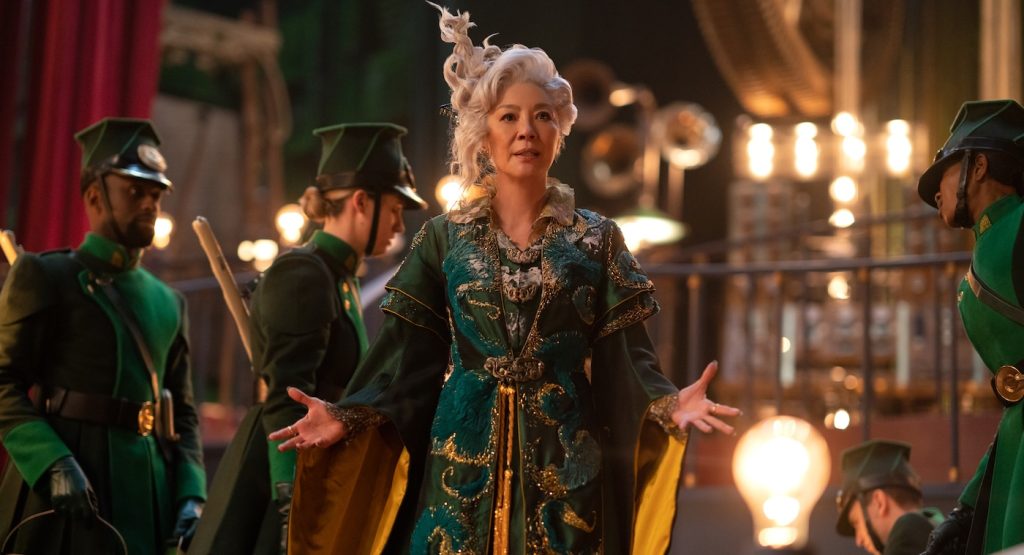
Wig-maker Samuel James wrote in an Instagram caption, “When Hair, Makeup and Prosthetics Designer, Frances Hannon, asks you to find the whitest hair to emulate clouds for Michelle Yeoh’s regal Madame Morrible, we knew that we had a challenge on our hands (you can imagine the rarity and cost of sourcing such hair).” Embroidery designer Cathryn Avison wrote on Instagram, “Embroidery created by my amazing team, thank you! We worked [on] the embroidery for all of Madam Morrible’s costumes, played by Michelle Yeoh. The costumes for Wicked are absolutely beautiful, thank you, @paultazewell, for giving me such creative freedom.”
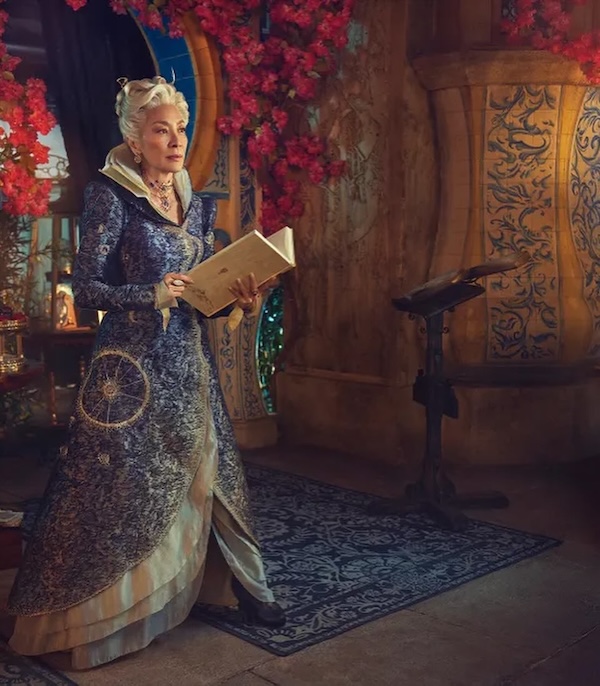
France Hannon designed Madame Morrible’s hair with the swirling clouds and tornado cyclones Morrible creates in mind. The hair is a nod to Morrible’s real power, showing her control with the perfectly crafted swirls.
Unlike Elphaba and Glinda, who remain only seen in their black and pink ensembles, Madam Morrible evolves throughout the two films with costume color. In her introduction at Shiz University, she is seen in a regal yet lighthearted gold-and-blue look. She starts with lots of blues in her wardrobe, establishing herself as Headmistress of Shiz and bonding with Elphaba. Over time, Madam Morrible’s appearance begins to take on a purple hue. This could indicate Glinda’s growing impact on the relationship between Elphaba and Madam Morrible, as a mix of blue and pink creates purple.
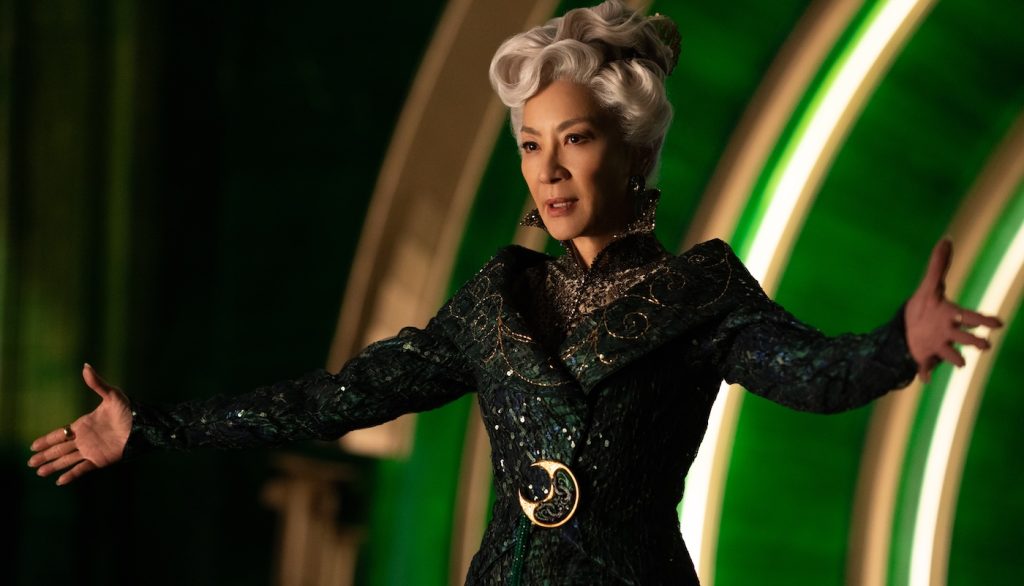
In Wicked: For Good, Madam Morrible’s transition to green reveals her new alliances with the Wizard. Green, often associated with greed, reflects a shift away from the bright, bubbly Shiz University toward the dark corruption and deception of Emerald City. The emerald color in Morrible’s costumes also indicates the real fuel behind the chaos and fear within Oz, which she claims is Elphaba’s wickedness.
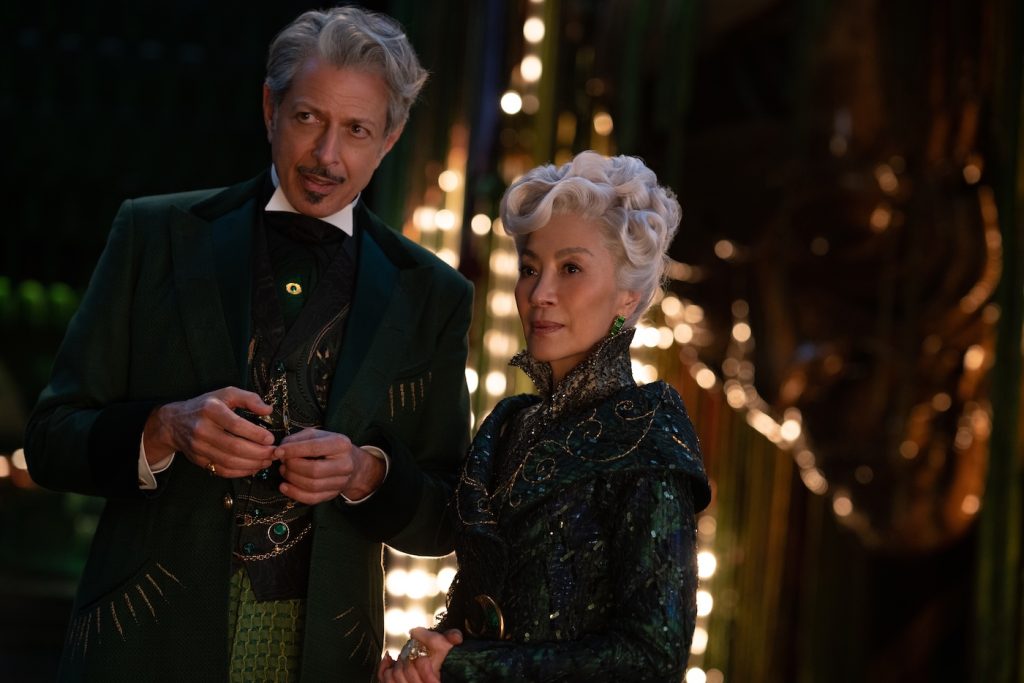
In the stage musical, Madam Morrible’s outfits become more extravagant and structured, shown “armoring up” against the witch. This pushes her authoritarian style and engineered fight against Elphaba, condemned as the publicly recognized Wicked Witch. On the stage and in the films, her wardrobe is a propaganda tactic. Perhaps to stand out to the audience, the stage musical is known for its bold presentation of Morrible’s costume, with a large puffy collar and clouds swirling around her.
Ahead of the release of Jon M. Chu’s Wicked in November 2024, we interviewed costume designer Paul Tazewell. We asked, “A lot of that comes across in the texture of the fabrics as much as the colors. Is it easier to get that across in film than with stage costuming?” Tazewell agreed, sharing, “You can’t do it as directly on stage. The benefit of film is you can get up close and see all of what we put in and the beauty the artisans in the UK were able to create.” These details are a key part of his storytelling, stating, “That’s how I see creating clothing, whether it’s period detail or detail that is represented by embroidery and imagery that speaks to the character.”
The costumes tell the classic story with elegant and modern looks, weaving in subtle but powerful details that align with each character’s identity and odyssey.
When asked how Tazewell balanced creating the breathtaking world in the first film but still leaving room to grow in the second film, he said, “When we were conceiving this world and how we wanted to tell the story, I had to figure out what the whole journey would be. I am always thinking about the emotional arc for each character and where we end up. I had a good sense of where we were going, and I had already slotted in the looks all the way through to the end of the second film.” Although things change on the fly, Tazewell expressed the importance of this deep preparation because “We were shooting scenes from the first film in the same week as we were shooting scenes from the second film. There was no choice but to make all those decisions at the front end.”
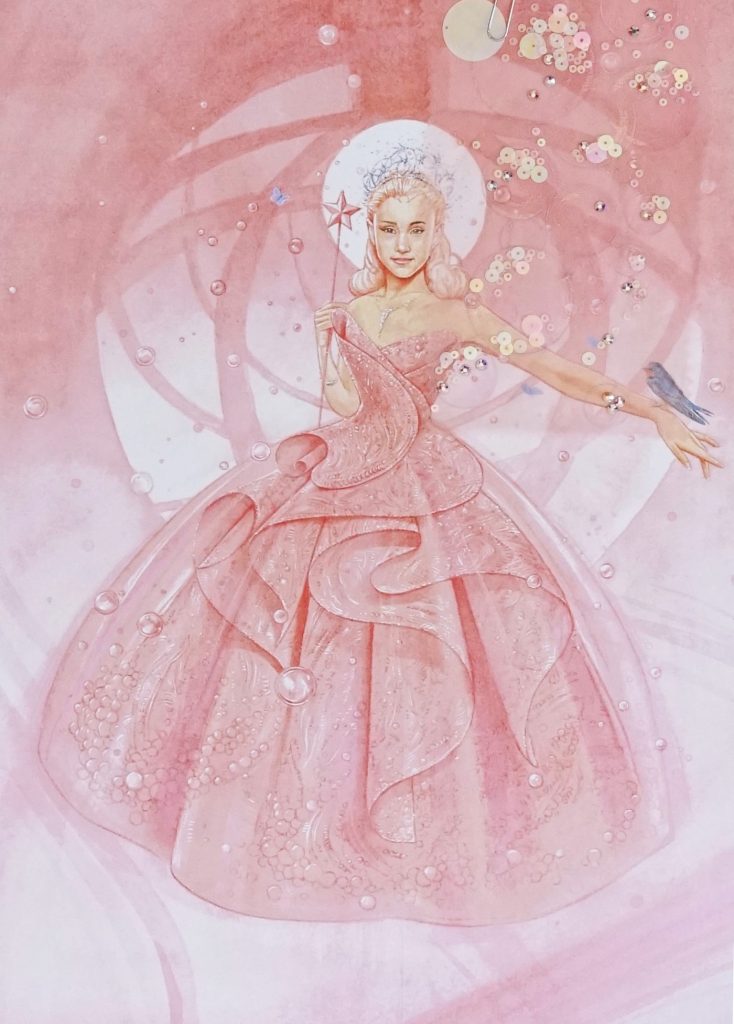
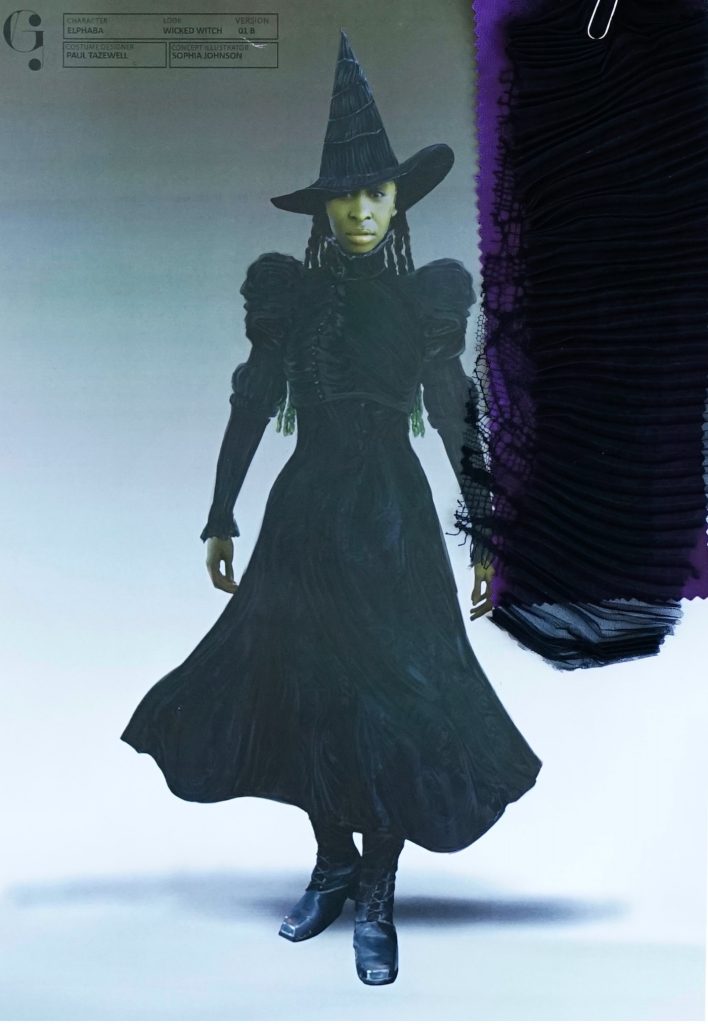
Tazewell explained that the cast’s personal relationships with fashion influenced the costume design choices. “Michelle, Jonathan, and Jeff each carry their own sense of style. They wear clothes beautifully, and clothing is meaningful to them, so it was important to honor that while interpreting who these characters are.”
Tazewell emphasizes the power of costume design as a force of perception, impacting how we make judgements and assumptions about characters. “That’s what fascinates me. How simple fabric can tell us who is a hero and who is wicked.”
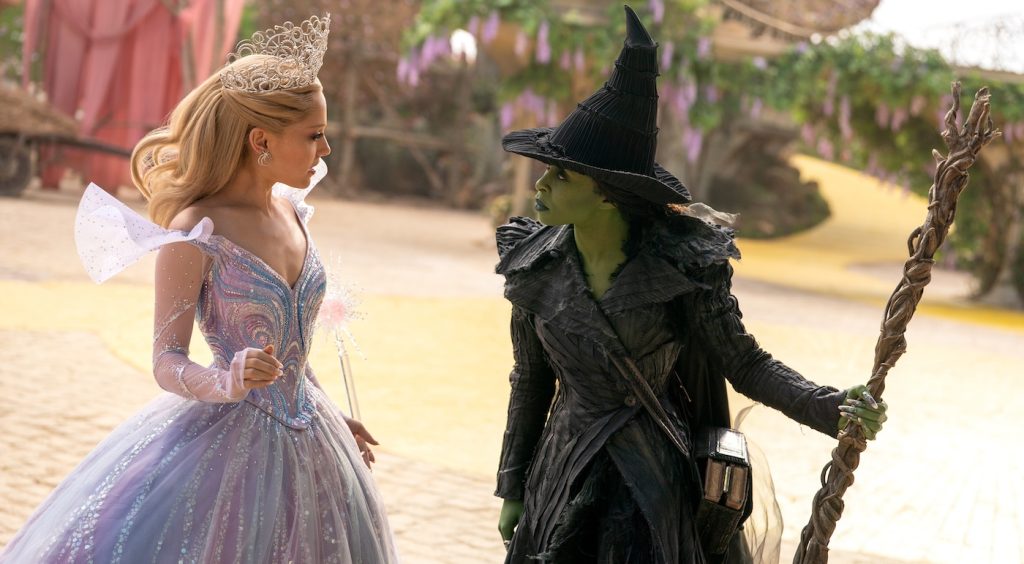
Tazewell shares that Glinda’s pink and Elphaba’s black clothing showing good and evil is not as simple as it would suggest, or should I say, as simple as it seams.
“Elphaba is compassionate and misunderstood, and Glinda, on the other side, isn’t always kind,” Tazewell says. Tazewell reflects on his connection to Elphaba’s experience as an outcast, describing how being a Black gay man has often led others to misjudge him at first glance. He channels these personal convictions into his work, infusing his characters with greater humanity.
Tazewell gave a TED Talk, stitching each step of his career into a story about emotions, perception, and deception. He closes by returning to the question, “What makes someone wicked?” He answers, “It isn’t the color of our skin, it isn’t the story we’ve been told, and it isn’t what they wear. It’s our perception. It’s the costume we’ve been handed and whether we choose to believe it.”
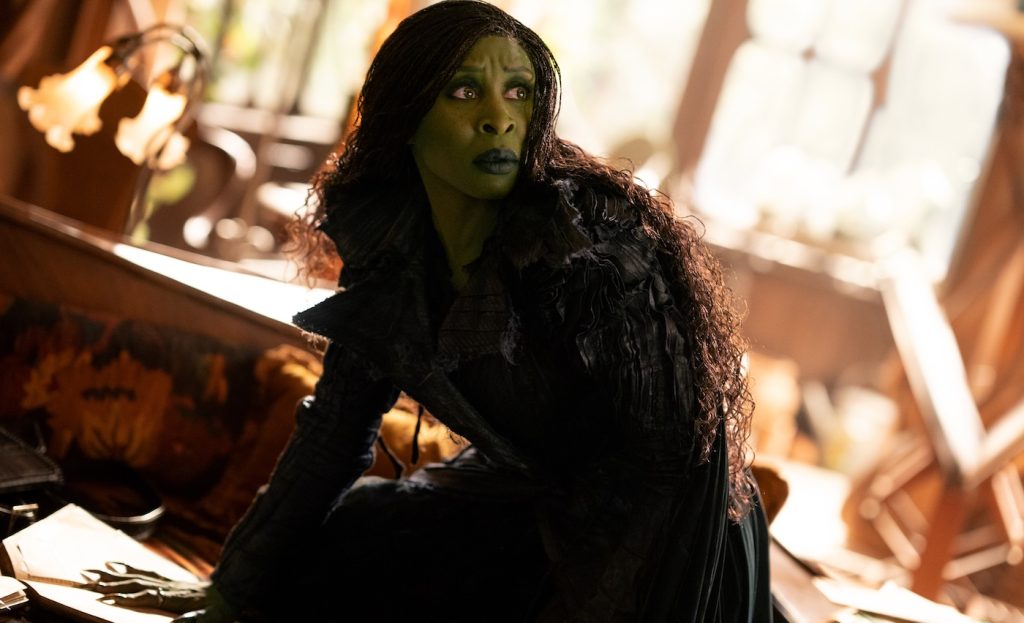
This sentiment guiding Tazewell’s costume design mirrors the cautionary lesson that Elphaba learns from the Wizard in Wicked: For Good. When Elphaba tirelessly works to expose his lack of real magic power, he tells her that people will believe what they want for ease and comfort, regardless of reality. “Truth is not a thing of fact or reason; the truth is just what everyone agrees on.”
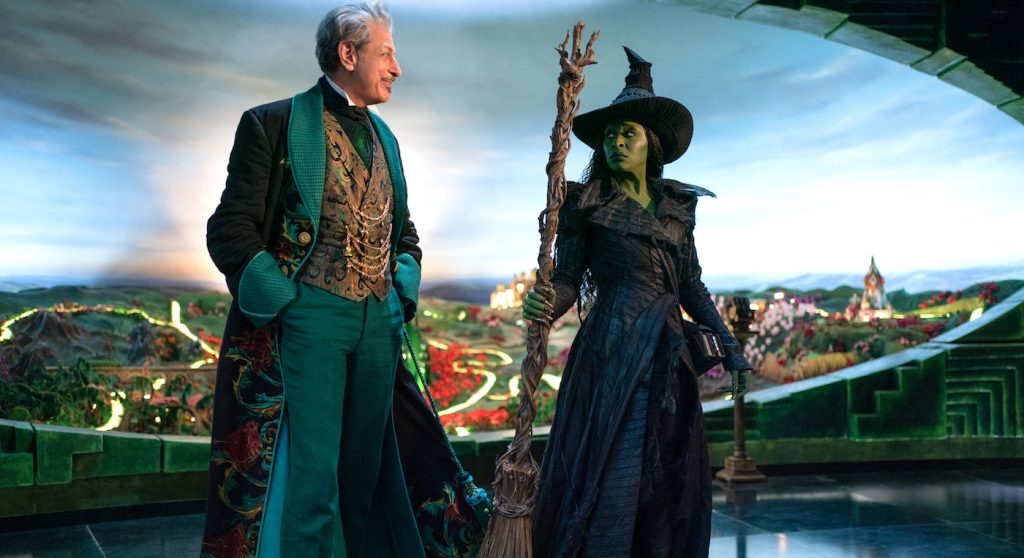
Bringing Wicked and Wicked: For Good to the screen required an extensive wardrobe, hair, and makeup operation. The production leaned on many local UK artisans and, at peak moments, had up to 150 crew members working with Tazewell.
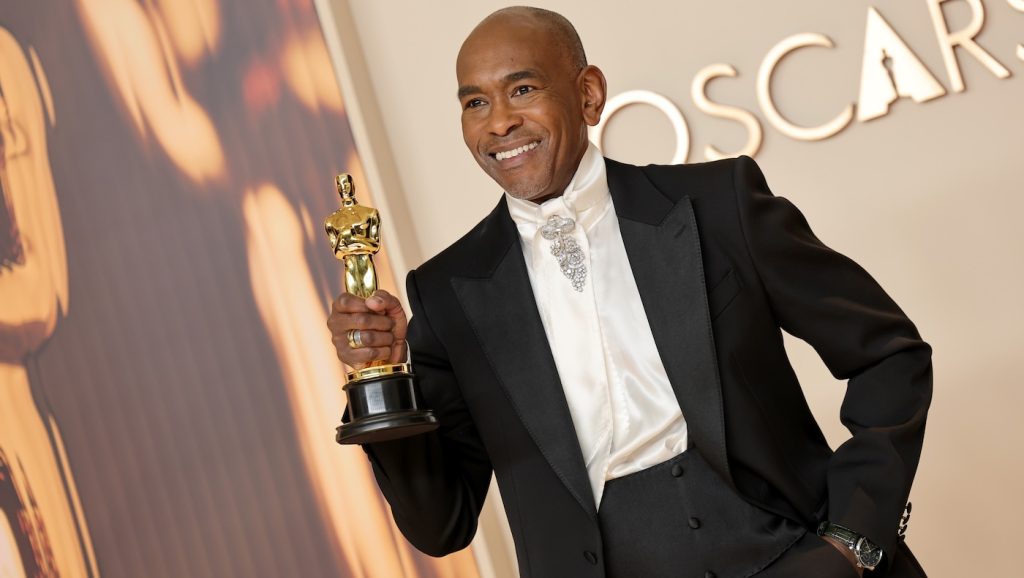
Tazewell made history as the first African American male nominated for an Academy Award for best costume design for Steven Spielberg’s West Side Story (2021). Then he made history again by winning the Academy Award for best costume design for Wicked.
With how important every stitch and thread, and every perfectly placed coif of hair is to both Wicked and Wicked: For Good, it seems to safe to say wizards are real—they just happen to be working in the movies.
Featured image: L to R: Michelle Yeoh is Madame Morrible and Ariana Grande is Glinda in WICKED FOR GOOD, directed by Jon M. Chu.

