How “Wicked” & “Wicked: For Good” Editor Myron Kerstein Balanced Two Films, Two Tones, One Story
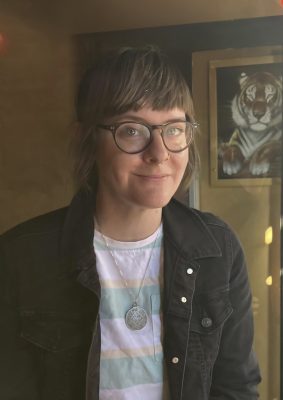
When I sat down with editor Myron Kerstein, it was immediately clear why director Jon M. Chu keeps bringing him back. Kerstein has the rare ability to blend a technical rigor with emotional intuition, a combination that has served him well on films like Crazy Rich Asians, In the Heights, and now, the two-part cinematic event Wicked and Wicked: For Good. As we spoke, it became equally evident that editing these films was not simply about assembling scenes or calibrating spectacle. It was about grounding an iconic story known for its massive sets, beloved songs, and spellbinding visual effects in something deeply human.
“I just want people to feel something,” Kerstein told me early in our conversation. “If I get anybody to escape for one moment and connect to characters that are otherwise not real, then that’s all we’re supposed to do as storytellers.”
Myron took me behind the curtain to tell me how he approached editing two massive musical films shot concurrently, the tonal puzzles he had to solve, the emotional architecture underlying every cut, and what Wicked ultimately taught him about filmmaking on its largest scale.
Cutting to the Heart of a Song
Musicals pose a unique editorial challenge. Every number must serve both narrative propulsion and spectacle without disrupting emotional momentum. For Kerstein, that balancing act guided his approach from day one. “My challenge was not to cut any scene any differently as if it was a dialogue scene,” he said. “There was no difference to me.” Whether two best friends were singing or simply speaking, he treated every moment with equal emotional seriousness.
He credits his long-standing shorthand with Chu, which has been developing since Crazy Rich Asians and deepened through In the Heights, for giving him the freedom to deconstruct traditional musical structure. “We could start and stop songs. We could tear them apart and put them back together again,” he explained. “But it was all to serve the emotional arc.” That philosophy became especially important in Wicked, where grounding the musical numbers made the spectacular ones shine even brighter. “If we can make the songs feel intimate and emotional,” he said, “then the other stuff will feel bigger.”
He approached the most iconic numbers the same way he would edit a love scene or a whispered goodbye: with restraint, reverence, and an eye for performance over spectacle. “Everything else doesn’t matter,” he said, “even the VFX. If it’s just two characters looking at each other, I don’t treat it any differently.”
Shifting Edits with Tonal Shifts
The tonal shift between the first and second Wicked films created one of Kerstein’s most significant editorial challenges. “We shot these two films simultaneously,” he said. “One day I’d get dailies for ‘Popular’ and the next it would be something like ‘No Good Deed.’ It’s a big brain fry.” He recalled calling Chu and cinematographer Alice Brooks on set to discuss the tone swing between shoots. They reassured him: Yes, it’s different. It’s supposed to be. Years pass between the two chapters, and the characters have changed. The story deepens.
Still, finding the editorial language for Wicked: For Good took time. Eventually, Kerstein embraced the tonal shift entirely. “The more I embraced it like an old Hollywood yarn, or a Douglas Sirk melodrama, the better and more sure-footed I was.” Part of that shift involved restructuring entire storylines. The arcs of Boq and Nessa, for example, originally appeared much earlier in the cut. “That was just way too early,” he told me. “We thought, okay, let’s drop us into this world with our superhero, Elphaba…then introduce Glinda and where she is on this journey.”
Even the emotional architecture of the film required reevaluation. “The first film was about choices,” he said. “The second film was about consequences.” With that framing, the slower burn, darker palette, and heavier emotional terrain became appropriate and necessary.
Finding a Visual Language for Darkness
To give the second film its own editorial voice, Kerstein began experimenting with stylistic and structural devices absent in the first. “One of the things I really started to play with was using flashbacks as a sort of lyrical way to ground us in the tone,” he said. They were not only functional, but emotional reprieves. “When you have a really dark scene…the lightness of these flashbacks helps.” He described these reflective inserts as a kind of Tree of Life-inspired visual grammar – moments that soften transitions, deepen emotional context, and build toward the film’s final movement. Without them, he said, the ending “would have come out of nowhere.”
Kerstein also leaned into the stylistic flair of classic cinema. “I love dissolves,” he admitted with a grin. To him, they’re a tribute to “the golden age of cinema,” a small but meaningful way to echo the melodramatic lineage the film’s second half draws from.
But not every stylistic flourish survived. Balancing comedy proved its own editorial terrain, especially given the stage show’s many beloved humorous beats. “There were some moments where we gave the comedy, and some where we ripped it away,” he recalled. At times, even canon jokes had to go. “Mark Platt would say, ‘No, we don’t need those jokes.’ And he was right. Sometimes it’s not the moment when the audience should laugh. It’s the moment where we need to feel Glinda’s pain.”
Maintaining Continuity While Jumping Between Two Films
Because Wicked and Wicked: For Good were shot concurrently, Kerstein had to keep track of two emotional timelines, two arcs, two editorial voices, often in the same day. “To ensure continuity, I built a screening room in the UK and watched dailies wash over me every day,” he said. Key [department heads] from every department were invited to join. “I treated both movies the same way…it was a sacred space where I was the first audience member.”
Chu also gave his department a visual map of the emotional timeline, which was an invaluable tool, Kerstein said, for keeping each character’s internal journey intact across two films.
In his edit rooms, he created physical scene boards for both chapters. “I’m staring at it like, ‘Okay, here we are in this part of the journey, and here we are over here.’” Certain sequences in one film were designed to mirror or contract those in the other, adding coherence even amid tonal divergence. After assembling both films early, the team put the second away for nearly a year. “We put the second film to sleep,” Kerstein said, allowing them to focus on shaping the first before returning to refine the sequel with fresh eyes.
Solving Set Piece and Song Puzzles
When I asked whether any sequences in Wicked: For Good proved unusually challenging, Kerstein laughed: “All of them.”
But as he elaborated, two areas stood out. Firstly, the opening: “Everyday More Wicked” had to function like “No One Mourns the Wicked” in the first film, simultaneously world-building, character-establishing, and narratively propulsive. “It was a lot of ripping apart and putting back together,” he said. Entire reprises, flashbacks, and opening sequences, like the yellow bricks being built in Munchkinland, were lifted or retooled to strike the right balance of energy and information.
Next, the ending: for Kerstein, the emotional ending truly begins with “For Good.” “That just took forever to figure out,” he told me. Multiple endings were written, including added dialogue scenes in the desert and variations of the final beat. “For me, the film ended at ‘For Good.’” Everything that followed had to carry that emotional thread without diluting it. “Just trying to continue that emotion all the way to the end…and make it feel grand and operatic and satisfying took a lot of back and forth.”
Kerstein cites the “For Good” sequence as one of the proudest moments of his career, alongside the mahjong scene in Crazy Rich Asians and the Ozdust Ballroom. “To me, it’s about movie stars looking at each other and us believing in that and escaping in it, even for a minute.”
Combining VFX with Performance
Despite the enormous visual effects demands of both films, Kerstein insists he never lets spectacle dictate editorial choices. “I pride myself on not letting VFX drive the train,” he said. Even scenes that appear simple, like “The Girl in the Bubble”, may contain invisible edits that take months to complete. Conversely, some of the most emotional numbers were filmed on empty soundstages, requiring tremendous imagination to visualize their final form. For example, “No Place Like Home” features Cynthia Erivo singing toward empty plates where animals would later be added via CGI. “It all starts with performance,” Kerstein explained. Only once that emotional foundation is cut does he bring in VFX teams or the music department to shape the necessary expansions.
This collaborative cycle often led to inventive musical adjustments. “I’d say to the music department, ‘I need to open this moment for the flying monkeys,’” he recalled. Stephen Schwartz himself sometimes responded with, “I never thought about opening up the song this way.”
Kerstein describes his emotional responsiveness as his superpower. In a world where nearly anything can be created digitally, he believes restraint and feeling must lead. “Just because we can, doesn’t mean we should,” he said. “We could do anything with ILM or Framestore…but what really matters is the relationship between these two incredibly strong women.”
What Wicked Taught Him
After two films, years of editing, and thousands of creative decisions, Kerstein walked away with a renewed sense of purpose. “It helped validate what I already knew,” he said. “We can dream big, but we can also connect emotionally to an audience.”
He and Chu continue to push boundaries together. “We keep challenging ourselves, breaking things, trying weird ideas that will make critics mad. But we don’t care, we’re doing something bigger than ourselves.” Kerstein hopes audiences, young and old, will feel what he felt as a child watching the films that shaped him, like E.T., Star Wars, and The Wizard of Oz. “I don’t want them to watch my movie once and forget it,” he said. “I just want to do for other people what those films did for me.”
As our conversation wound down, Kerstein reflected on the cultural impact the Wicked films have already had. “You never know if people are going to show up or connect,” he said. “The fact that the fans really want to see it…that’s all this is about.” What delighted him the most, though, was seeing the films become part of the online culture. “To have your movie be a meme? Good or bad, it’s the best,” he laughed. “To be part of the cultural conversation about anything is a miracle.” He paused, smiling. “That’s exciting when it’s bigger than yourself. You just give it to the world and it’s like, ‘Let’s take this and have fun with it.’”
With broken records for the highest-grossing opening weekend for a Broadway musical adaptation, surpassing the original Wicked movie’s opening, it’s clear that audiences are, indeed, having fun with it. Wicked: For Good is now playing in theaters nationwide.
Featured image: L to R: Cynthia Erivo is Elphaba, Ariana Grande is Glinda, and Jeff Goldblum is The Wizard of Oz in WICKED FOR GOOD, directed by Jon M. Chu.